Books & articles directory
A selective companion of 60 novels, memoirs, popular psychology books, and foundational academic monographs, with related research articles. Read across centuries, follow a psychology topic, or compare a book’s claims with its academic sources. Literary interpretation and research evidence are labeled separately.
Find a work
60 works, ordered by title
No works match these filters
Try a shorter search or clear the filters to see every selected work.
The Anxious Generation
A 2024 book makes a strong causal argument about smartphones and adolescent distress. Compare its public framing with a Nature book review whose standfirst calls the evidence equivocal.
2024Nonfiction · Popular psychologyDevelopmentSocial influenceDisorders & diagnosis
Published critique or methodological audit: (Odgers, 2024)
Asylums: Essays on the Social Situation of Mental Patients and Other Inmates
Four linked essays by sociologist Erving Goffman on total institutions, from prisons and boarding schools to mental hospitals, and on how institutional life is organized around the inmate. Paired with Rosenhan's 1973 article on psychiatric hospitals.
1961 (reissued 2022)Academic · Scholarly monographTherapy & ethicsDisorders & diagnosisSocial influence
Interpretive thematic pairing: (Rosenhan, 1973)
Atomic Habits
James Clear's 2018 self-help book presents habit advice built around systems, environment and identity. Compare it with one longitudinal study of self-reported habit automaticity.
2018Nonfiction · Self-help and adviceLearningEmotionSelf & personality
Interpretive thematic pairing: (Lally et al., 2009)
The Behavior of Organisms: An Experimental Analysis
B. F. Skinner's first book, in which he proposes rate of responding as the basic datum of a science of behavior and lays out a research program to identify what behavior is a function of.
1938 (Foundation reprints 1991 and 1999)Academic · Scholarly monographLearning
The Bell Jar
Esther Greenwood’s ambitions and distress invite a reading of how a restricted set of possible futures can feel like confinement.
1963Fiction · NovelDisorders & diagnosisDevelopment
Interpretive thematic pairing: (Hoag, 2024a)
Beloved
Sethe's haunted home brings the aftermath of enslavement into a family story about remembering, love, and survival.
1987Fiction · NovelStress & traumaMemoryPrejudice & culture
The Body Keeps the Score: Brain, Mind, and Body in the Healing of Trauma
A trauma researcher's argument that trauma changes both brain and body, followed by an account of treatments he discusses; its causal and treatment claims are disputed.
2014Nonfiction · Popular psychologyStress & traumaDisorders & diagnosisEmotion
Published critique or methodological audit: (Scheeringa, 2025)
Childhood and Society
Erik Erikson's 1950 book on the social significance of childhood, which a catalog description says combines clinical psychoanalysis with cultural anthropology.
1950Academic · Scholarly monographDevelopmentSelf & personalitySocial influence
Civilization and Its Discontents
Freud's late essay on what civilization asks of the individual, centered in the English text on the restraint of aggression and the sense of guilt.
1930Academic · Scholarly monographSelf & personalityEmotionSocial influence
Crime and Punishment
Who gives a person permission to stand above ordinary rules? Examine moral justification in a novel’s debate.
1866 publicationFiction · NovelCognitionSelf & personalitySocial influence
Interpretive thematic pairing: (Bandura, 1999)
Darkness Visible: A Memoir of Madness
William Styron's short memoir of his own severe depression, which began as a 1989 magazine essay.
1990Nonfiction · MemoirDisorders & diagnosisEmotion
Dubliners
A song recalls a life Gabriel did not know. Read The Dead through memory and the limits of knowing another person.
1914 publicationFiction · Short storyMemoryEmotionSelf & personality
Interpretive thematic pairing: (Conway & Pleydell-Pearce, 2000)
Educated: A Memoir
Tara Westover’s account of entering education after an isolated childhood raises questions about family loyalty, authority, and identity.
2018Nonfiction · MemoirDevelopmentSelf & personality
Emotional Intelligence: Why It Can Matter More Than IQ
Daniel Goleman's trade book argues that self-awareness, self-discipline and empathy help explain why some high-IQ people struggle and others do well, and that these skills can be developed in adulthood.
1995Nonfiction · Popular psychologyEmotionCognitionSelf & personality
Escape from Freedom
Erich Fromm's 1941 study of why people may give up freedom for authority, which one publisher describes as a classic account of the psychological appeal of fascism.
1941Academic · Scholarly monographSocial influenceSelf & personalityTherapy & ethics
The Expression of the Emotions in Man and Animals
Charles Darwin's 1872 treatise on the expressions of emotion in people and animals, which opens with general principles of expression and then works through animals and a series of human expressions.
1872Academic · Foundational treatiseEmotionPerception & brainSocial influence
The Fifth Season
A world of recurring catastrophe makes secrecy and survival inseparable. Jemisin’s speculative premise opens a route into stigma, threat, and the costs of concealing a devalued identity.
2015Fiction · NovelPrejudice & cultureStress & traumaEmotion
Interpretive thematic pairing: (Major & O’Brien, 2005)
Flow: The Psychology of Optimal Experience
Mihaly Csikszentmihalyi's 1990 book presents his research on optimal experience and names flow, the state of total involvement in an activity.
1990Nonfiction · Popular psychologyConsciousnessEmotion
Flowers for Algernon
An imagined operation to increase intelligence raises questions about ability, dignity, and the ethics of research participation.
1966Fiction · NovelCognitionTherapy & ethicsSelf & personality
Frames of Mind: The Theory of Multiple Intelligences
Howard Gardner's 1983 book challenges the idea that intelligence is a single general capacity and proposes several distinct kinds. Paired with a 2006 critical review of the theory's empirical support.
1983Academic · Scholarly monographCognitionDevelopmentLearning
Published critique or methodological audit: (Waterhouse, 2006)
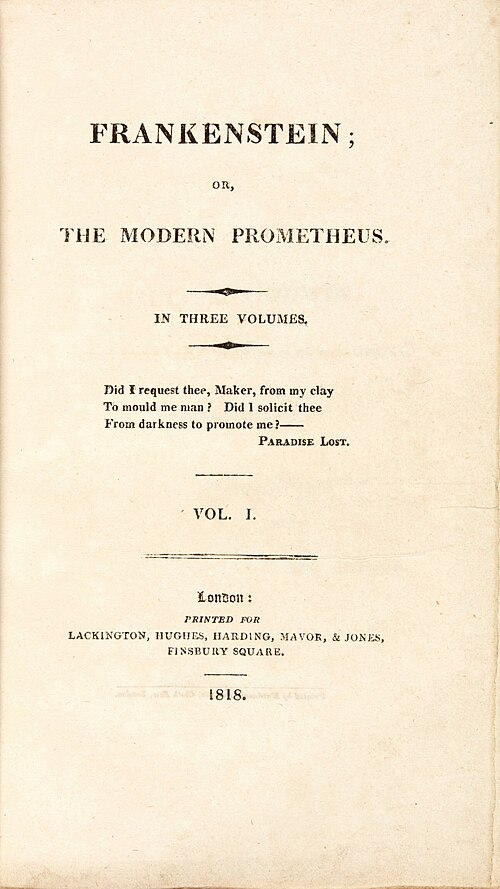
Frankenstein; or, The Modern Prometheus
A creature asks his creator to listen. Read their encounter through belonging, rejection and responsibility.
1818 publicationFiction · NovelDevelopmentLearningSocial influence
Interpretive thematic pairing: (Baumeister & Leary, 1995)
Girl, Interrupted
Susanna Kaysen's memoir of about two years at McLean Hospital, beginning in 1967 when she was 18, and of how people are sorted into sane and insane.
1993Nonfiction · MemoirTherapy & ethicsDisorders & diagnosisDevelopment
Interpretive thematic pairing: (Rosenhan, 1973)
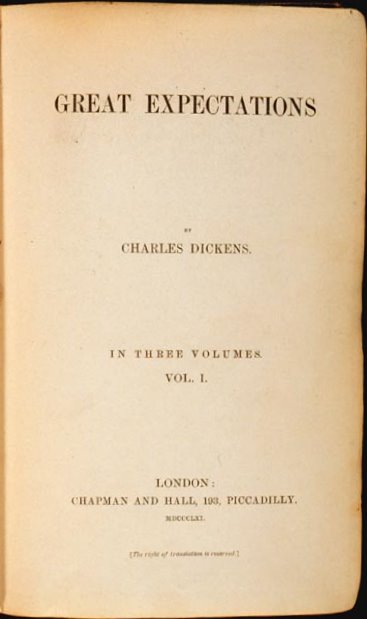
Great Expectations
Pip learns to be ashamed of his hands. Follow the moment social judgment becomes self-judgment.
1861 publicationFiction · NovelSelf & personalitySocial influenceMemory
Interpretive thematic pairing: (Conway & Pleydell-Pearce, 2000)
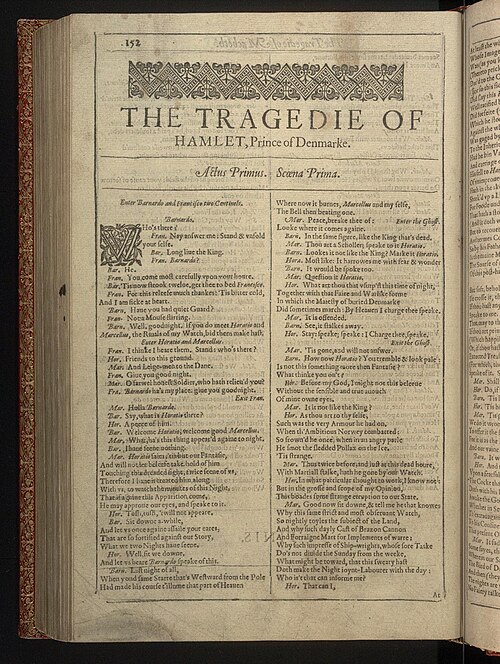
Hamlet
A soliloquy makes hesitation audible. Compare thought, conscience and the difficulty of acting.
1603 publicationFiction · DramaConsciousnessEmotionStress & trauma
Interpretive thematic pairing: (Nolen-Hoeksema et al., 2008)
The Handmaid's Tale
Offred’s recollections of her former life confront the identity and role imposed on her by a totalitarian theocracy.
1985Fiction · NovelTherapy & ethicsSocial influencePrejudice & culture
The Happiness Hypothesis: Finding Modern Truth in Ancient Wisdom
Jonathan Haidt takes ten Great Ideas about a good life from ancient traditions and sets them against psychological research.
2006Nonfiction · Popular psychologyEmotionSelf & personality
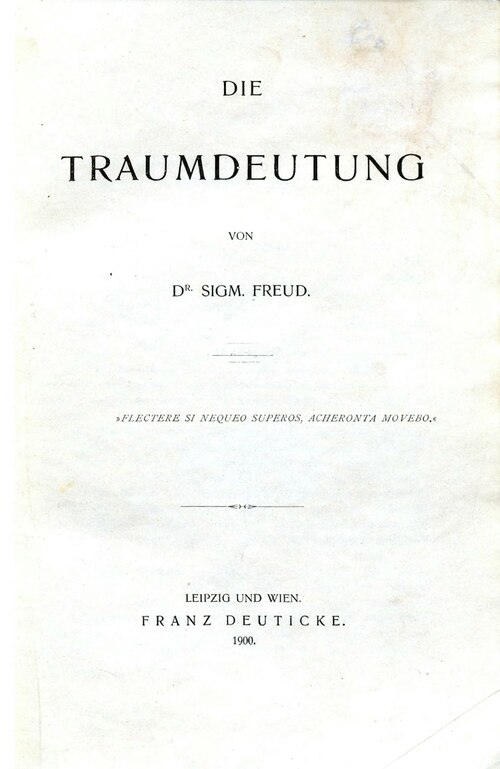
The Interpretation of Dreams
Freud’s historical theory distinguishes the dream we remember from latent dream thoughts. Explore the difference between interpreting meaning and testing an explanation.
1899 (title page dated 1900)Academic · Foundational treatiseConsciousnessSelf & personality
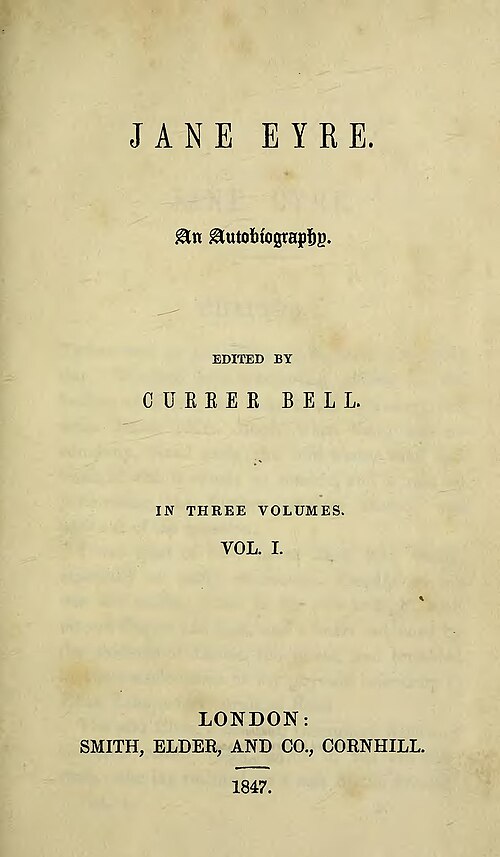
Jane Eyre: An Autobiography
From enforced dependence to an independent will: read Jane’s voice alongside autonomy and relatedness.
1847 publicationFiction · NovelDevelopmentSelf & personalityEmotion
Interpretive thematic pairing: (Ryan & Deci, 2000)
Kindred
Dana moves between 1970s California and a slaveholding ancestor’s world, making power, kinship, and constrained choices difficult to separate.
1979Fiction · NovelStress & traumaPrejudice & cultureMemory
The Lottery
An annual village gathering turns familiar civic routines into a disturbing question: when does keeping a tradition become a way to stop questioning it?
1948Fiction · Short storySocial influencePrejudice & cultureCognition
Interpretive thematic pairing: (Bandura, 1999)
The Man Who Mistook His Wife for a Hat
A collection of neurological case narratives. Use it to ask what a single case can show and what a description of symptoms can leave out.
1985Nonfiction · Clinical case narrativePerception & brainMemoryCognition
Clinical or lived narrativeRead work profile: The Man Who Mistook His Wife for a HatFind in timelineMan's Search for Meaning
Viktor E. Frankl's account of his time as a prisoner in Nazi concentration camps, with an outline of logotherapy, his method built on finding meaning.
1946 (German original)Nonfiction · MemoirStress & traumaEmotionSelf & personality
The Metamorphosis
Gregor worries about work before he can explain his changed body. Examine obligation, usefulness and recognition.
1915 publicationFiction · NovellaPrejudice & cultureSocial influenceStress & trauma
Interpretive thematic pairing: (Major & O’Brien, 2005)
The Mismeasure of Man
Stephen Jay Gould's history and critique of efforts to rank people by a single measure of intelligence, including skull measurement and mental testing.
1981Nonfiction · History and critiqueCognitionPrejudice & culture
Published critique or methodological audit: (Lewis et al., 2011)
Motivation and Personality
Abraham Maslow's 1954 book on motivation and self-actualization, which a secondary reference describes as addressing human fulfillment and personal relationships.
1954 (second edition 1970)Academic · Scholarly monographSelf & personalityEmotionDevelopment
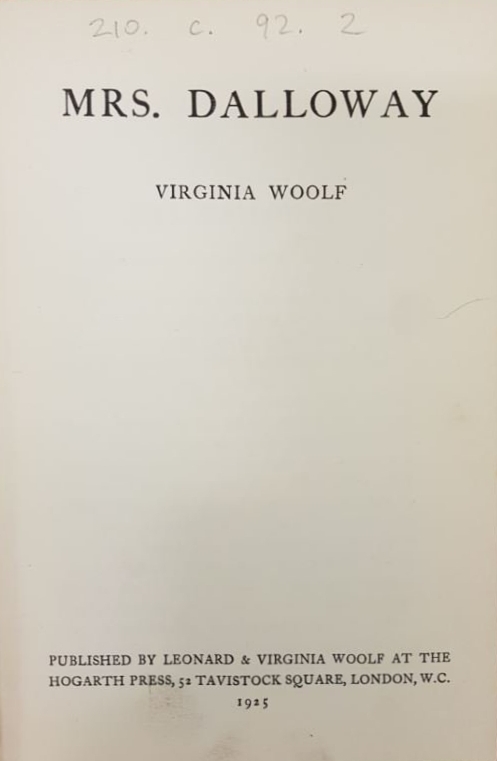
Mrs Dalloway
The same London moment unfolds differently for different minds. Follow awareness, memory and perspective.
1925 publicationFiction · NovelConsciousnessMemoryStress & trauma
The Nature of Prejudice
Gordon Allport's 1954 study of prejudice, which publisher and catalog descriptions present as a wide survey of research on the roots and nature of racial, religious, ethnic, economic and sexual prejudice.
1954 (25th anniversary edition 1979)Academic · Scholarly monographPrejudice & cultureSocial influenceCognition
Never Let Me Go
Kathy looks back on her childhood at Hailsham, where friendship and belonging develop within rules the pupils do not fully understand.
2005Fiction · NovelDevelopmentSocial influenceMemory
Nineteen Eighty-Four
Winston Smith rewrites public records for the Party, inviting questions about authority, language, and who controls an account of events.
1949Fiction · NovelSocial influenceCognitionMemory
The Noonday Demon: An Atlas of Depression
Andrew Solomon examines depression in personal, cultural and scientific terms, drawing on his own illness and on interviews.
2001Nonfiction · MemoirDisorders & diagnosisEmotion
Interpretive thematic pairing: (Kessler et al., 2003)
Clinical or lived narrativeRead work profile: The Noonday Demon: An Atlas of DepressionFind in timelineObedience to Authority: An Experimental View
Stanley Milgram's 1974 book about his obedience experiments, in which volunteers were told to give electric shocks to a learner. Paired with his own 1963 journal report of the procedure.
1974Academic · Scholarly monographSocial influenceTherapy & ethics
Direct empirical or theoretical source: (Milgram, 1963)
One Flew Over the Cuckoo's Nest
Chief Bromden narrates a mental ward’s conflict between Nurse Ratched and the newly arrived McMurphy, opening questions about institutional authority.
1962Fiction · NovelTherapy & ethicsDisorders & diagnosisSocial influence
The Organization of Behavior: A Neuropsychological Theory
Donald Hebb’s 1949 theoretical book links behavior with the organization of neural networks. The reissue’s publisher description identifies the cell assembly, Hebb synapse, and Hebb rule among its ideas.
1949 (reissued 2002)Academic · Scholarly monographLearningMemoryPerception & brain
Phantoms in the Brain: Probing the Mysteries of the Human Mind
V. S. Ramachandran and Sandra Blakeslee use simple experiments on patients with unusual neurological conditions to ask how the brain builds body image and the sense of self.
1998Nonfiction · Clinical case narrativePerception & brainConsciousness
Direct empirical or theoretical source: (V. S. Ramachandran, 1996)
Clinical or lived narrativeRead work profile: Phantoms in the Brain: Probing the Mysteries of the Human MindFind in timelineThe Power of Habit: Why We Do What We Do in Life and Business
Charles Duhigg draws on research about how habits form and change, with stories from business, sports and the civil rights movement.
2012Nonfiction · Self-help and adviceLearning
The Presentation of Self in Everyday Life
Erving Goffman's account of how people behave in social settings and how they come across to others, using theatrical performance as its framework.
1956 (U.S. edition 1959)Academic · Scholarly monographSocial influenceTherapy & ethicsSelf & personality
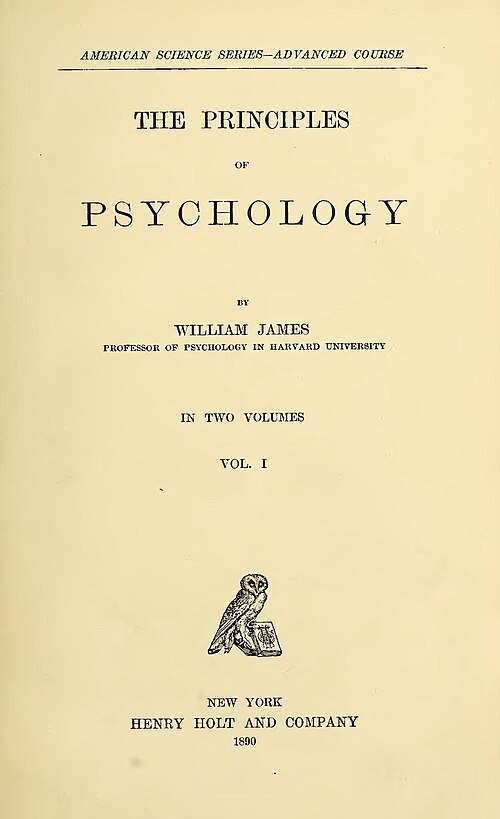
The Principles of Psychology
James describes habit, a flowing stream of thought and the selective work of attention. Read the historical arguments beside the questions psychology still asks.
1890Academic · Foundational treatiseConsciousnessEmotionLearning
Direct empirical or theoretical source: (James, 1884)
Quiet: The Power of Introverts in a World That Can't Stop Talking
Susan Cain's 2012 book argues that introverts are undervalued. Compare that cultural argument with how introductory psychology treats extraversion and introversion as a trait dimension.
2012Nonfiction · Popular psychologySelf & personalitySocial influenceDevelopment
Remembering: A Study in Experimental and Social Psychology
Frederic C. Bartlett's 1932 monograph presents remembering as reconstruction guided by schemas, illustrated through story retelling, according to the Cambridge University Press description.
1932Academic · Scholarly monographMemoryCognition
Interpretive thematic pairing: (Conway & Pleydell-Pearce, 2000)
Slaughterhouse-Five
Billy Pilgrim’s disrupted sequence of experiences turns war, time, and the way a life is narrated into questions for the reader.
1969Fiction · NovelStress & traumaMemoryConsciousness
The Story of My Life
Helen Keller's 1903 volume combines her memoir, selected letters and a supplementary account edited from Anne Sullivan's reports. This profile reads only the editor's preface and part of Chapter IV.
1903Nonfiction · MemoirCognitionPerception & brainDevelopment
Strange Case of Dr Jekyll and Mr Hyde
Jekyll offers an explanation of his divided self. Does it clarify responsibility or evade it?
1886 publicationFiction · NovellaSelf & personalityConsciousnessSocial influence
The Stranger
Meursault’s account of events in French Algeria raises questions about judgment, perspective, and the expectations brought to another person’s story.
1942Fiction · NovelEmotionSocial influenceCognition
A Theory of Cognitive Dissonance
Leon Festinger's 1957 monograph proposes that inconsistent cognitions produce psychological discomfort that motivates efforts to reduce the inconsistency.
1957Academic · Scholarly monographCognitionSocial influenceEmotion
Things Fall Apart
Okonkwo’s story puts personal standing and fear alongside the disruption of a community under British colonialism.
1958Fiction · NovelPrejudice & cultureSocial influence
Thinking, Fast and Slow
Daniel Kahneman's 2011 trade synthesis presents decades of collaborative research with Amos Tversky on judgment heuristics, cognitive biases, and decision-making using the expository metaphor of fast intuitive and slow deliberative thinking.
2011Nonfiction · Popular psychologyCognitionSocial influence
Direct empirical or theoretical source: (Tversky & Kahneman, 1974a)
To Kill a Mockingbird
Atticus Finch’s defense of a wrongly accused Black man invites questions about prejudice, social judgment, and what a legal process can reveal about a community.
1960Fiction · NovelPrejudice & cultureSocial influence
An Unquiet Mind: A Memoir of Moods and Madness
Kay Redfield Jamison, a clinician and researcher of manic-depressive (bipolar) illness, writes about living with the illness herself.
1995Nonfiction · MemoirDisorders & diagnosisEmotion
Clinical or lived narrativeRead work profile: An Unquiet Mind: A Memoir of Moods and MadnessFind in timelineThe Varieties of Religious Experience: A Study in Human Nature
William James's Gifford Lectures on personal religious experience, which set institutional religion aside and move from healthy-mindedness and the sick soul through conversion and saintliness to mysticism.
1902Academic · Foundational treatiseConsciousnessEmotionSelf & personality
The Yellow Wallpaper
A narrator writes in secret while others decide what is good for her. Explore voice, care and authority.
1892 publicationFiction · Short storyTherapy & ethicsPerception & brainDisorders & diagnosis
Interpretive thematic pairing: (Rosenhan, 1973)