Back to the directoryFind in the timeline
Frankenstein; or, The Modern Prometheus
A creature asks his creator to listen. Read their encounter through belonging, rejection and responsibility.
- Author and origin
- Mary Shelley (United Kingdom)Original language: English. The chronology uses the work’s publication year. Images and translations are identified separately.
- Genre and form
- Fiction (Novel)Novels, novellas, short stories, and drama read through an interpretive psychological lens, never as clinical cases.
- Pairing and evidence
- Interpretive readingAn editorial psychological reading of fiction or memoir. A paper is paired only where the connection is substantive; the narrative is not empirical evidence.
- Sources inspected
- 2 text/abstract inspected, 1 metadata checked (of 3)1 with the primary text or archive/edition record checked, 1 with an indexed abstract read, 1 with bibliographic metadata checked, 0 not verified.
Interpretive thematic pairingPaired academic work
Source independence: Independent of the book’s author.
How it connects: An editorial thematic comparison. This paper does not study the literary work or establish an influence on its author.
Exact claim scope: The review evaluates belonging as a motivation involving ongoing relationships and repeated, nonaversive interaction. Claims here stay within the inspected abstract.
Attributed cover, adaptation, and trailer links
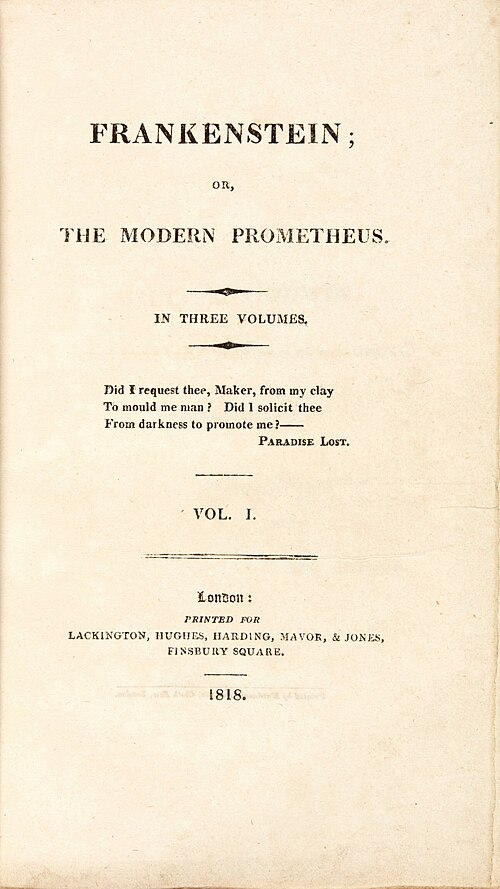
Historical edition or title page

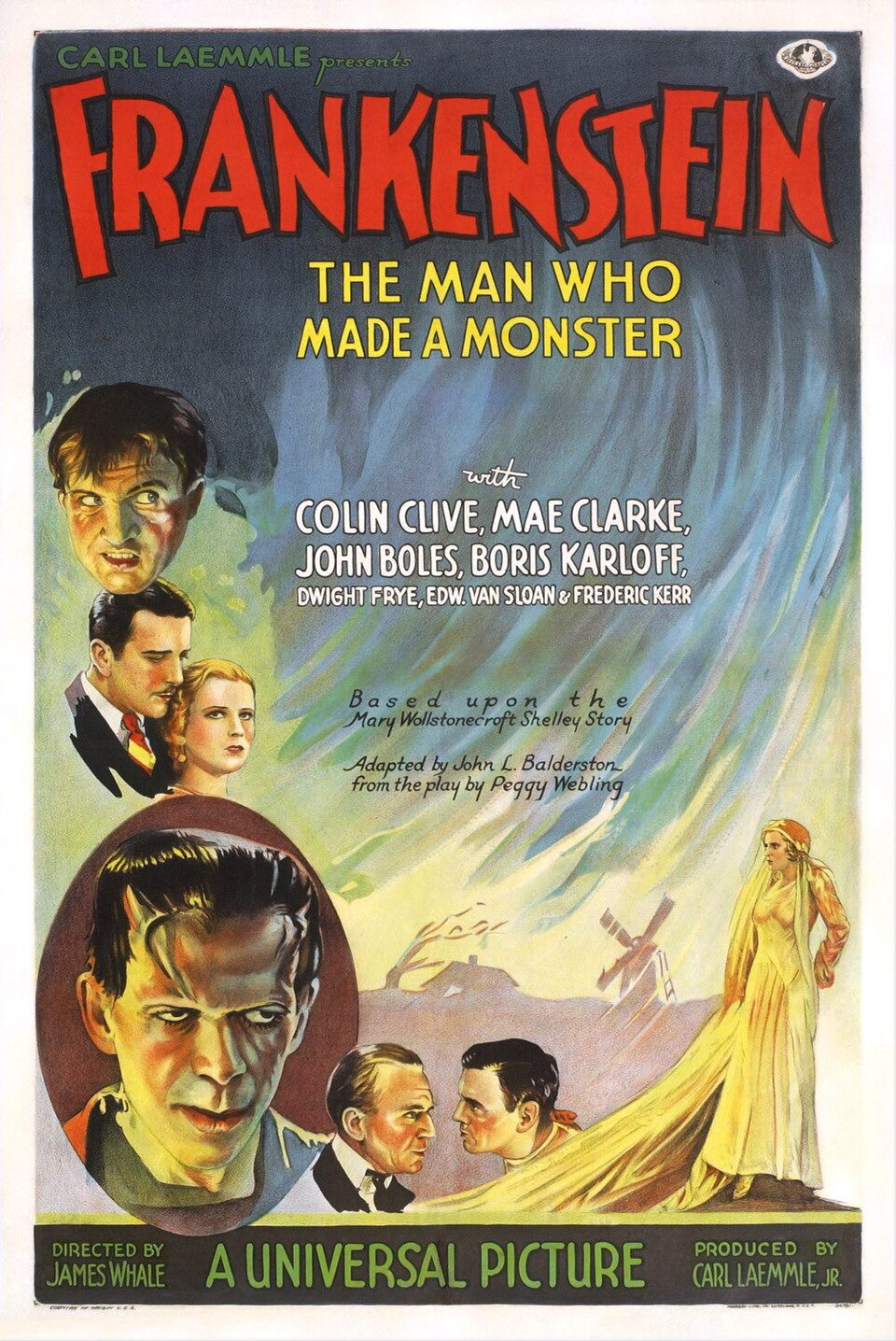
Screen adaptation: Frankenstein (1931 film) (1931)

The work and edition history
Shelley places the creature’s account inside Victor’s narrative. The glacier confrontation gives the being who was created a chance to challenge the person who abandoned him. The selected passage asks readers to hear a voice that other characters reject on sight.
Psychological reading
In the glacier encounter, the creature describes himself as excluded from human fellowship and connects his misery with hostility. The De Lacey family’s history enters his own account as he watches a household whose relationships he longs to join.
Why it earns inclusion
What is the difference between observing a relationship and being accepted into one? The novel makes that question vivid. It also puts responsibility toward a dependent being beside the excitement of scientific achievement, giving students a way to discuss care, exclusion and research ethics.
Academic pairing and claim scope
Baumeister and Leary’s 1995 review offers a conceptual comparison: belonging requires mutual relationships, not simply proximity to other people. Use the pairing to ask what the creature lacks. The review neither analyzes Shelley’s novel nor establishes a cause for a fictional character’s violence.
Limits and controversies
The creature is a literary construction, not a developmental case study. His account should not be used to infer a universal pathway from rejection to aggression. This profile reads selected passages, with no claim that the novel demonstrates an empirical law.
Evidence behind the claims
In the glacier encounter, the creature describes himself as excluded from human fellowship and connects his misery with hostility. The De Lacey family’s history enters his own account as he watches a household whose relationships he longs to join.
The review evaluates belonging as a motivation involving ongoing relationships and repeated, nonaversive interaction.
Authors and researchers
- Mary Shelley. Author
In the Psy101 course
- OpenStax Psychology 2e, section 9.3: Stages of DevelopmentChapter 9, Lifespan Development. Concept. Suggested conceptual background; a mention of this work in the section has not been verified.Compare the need for responsive relationships with introductory social development.
- OpenStax Psychology 2e, section 2.4: EthicsChapter 2, Psychological Research. Ethics and limits. Suggested conceptual background; a mention of this work in the section has not been verified.Discuss responsibility for the welfare of beings affected by an investigation.
Educational reading guide only, not clinical diagnosis or treatment guidance. This course map indicates introductory curriculum relevance rather than clinical proof.See the full course map.
Sources and inspection
Of 3 cited sources, 1 had primary text or archive/edition records checked, 1 had an indexed abstract read, and 1 had bibliographic metadata checked (0 unverified). Literary works and memoirs are distinguished from empirical research studies.
- [2]Baumeister, R. F., & Leary, M. R. (1995). The need to belong: Desire for interpersonal attachments as a fundamental human motivation. Psychological Bulletin, 117(3), 497–529. https://doi.org/10.1037/0033-2909.117.3.497Journal article. Paired academic research.Indexed abstract readIndexed abstract read; not a full-paper inspection.
- [3]Pictures, U. (n.d.). Frankenstein (1931): Film details. Universal Pictures. https://www.universalpicturesathome.com/movies/frankenstein-1931Reference work. Historical or biographical context.Bibliographic metadata or reference record checkedFilm title, year and credit metadata checked; no full-film viewing or comparative technique claim.
- [1]Shelley, Wollstonecraft, M., & 1797-1851. (n.d.). Frankenstein; or, the modern prometheus. Project Gutenberg. https://www.gutenberg.org/cache/epub/84/pg84-images.htmlPrimary literary or historical text. Work, edition, or catalog record.Primary text or passage readSelected passages in the linked text were read; this does not claim a whole-book reading. Glacier encounter, Chapter 10; De Lacey family history, Chapter 14 Digital reading edition; its date is not asserted to be the original publication date. Project Gutenberg 84 uses the revised 1831 text; the work chronology and separate title-page image refer to 1818.